
Zero Gravity Massage Chairs: What the Recline Actually Does (and the Claims to Ignore)
Deciding Which to Stock?
We carry both massage sofas and massage chairs — get wholesale pricing and expert advice on which moves faster in your market.
By: Sweet Home · Published: November 17, 2026 · 🛠️ HOW-TO
Zero gravity is the most advertised feature on a massage chair — and, in our experience, the most misunderstood one. In the fit and after-sales issues we see on export orders, the mechanism is rarely the problem; the expectation is. This guide covers what zero gravity actually does to your body, what NASA really said, and how to tell a real zero gravity chair from a marketing sticker — in the question form buyers actually search.
What does zero gravity mode actually do?
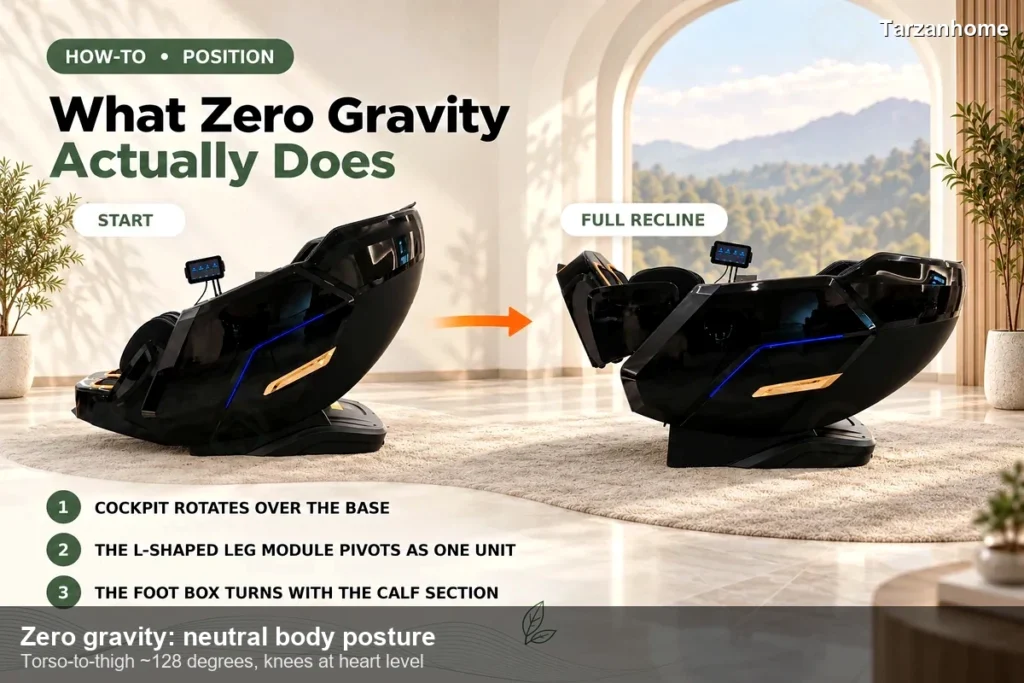
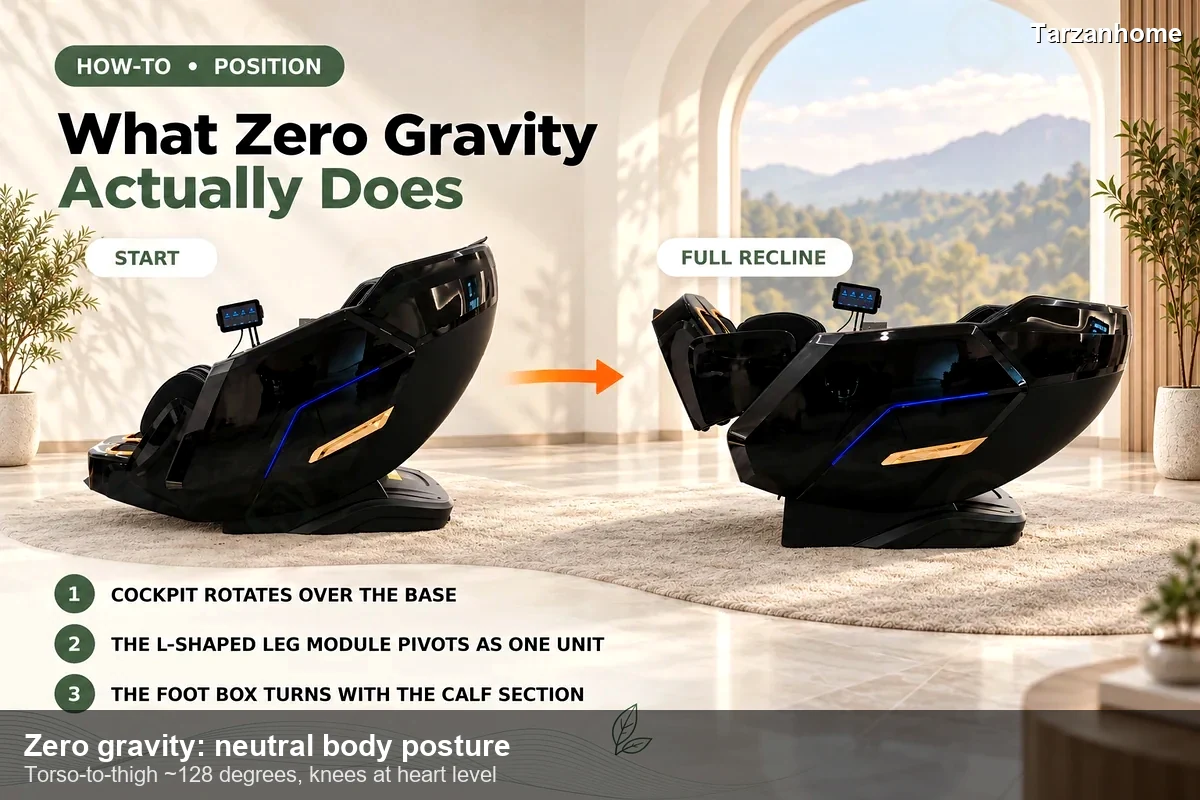
On a properly designed chair, the seat and backrest tilt back as one unit while the leg rest rises until your knees are near heart level. Three things change in that motion:
- Your hips stay planted. On a plain recliner, the backrest goes down and your hips slide forward — your lower back loses contact with the chair. On a zero gravity chair, the seat tilts with the back, so your spine stays supported through the whole movement.
- Your legs unload. Your calves and feet stop carrying their own weight, which takes pressure off your lower back and hips.
- Your weight moves onto the rollers. More of your body weight presses into the backrest — exactly where the massage mechanism works. That’s why the same massage feels deeper in zero gravity than upright: you press into it instead of bracing against it.
Is “zero gravity” really based on NASA?
The name comes from NASA’s Skylab missions in the 1970s, when researchers filmed astronauts floating in the cabin and mapped how the body settles when no muscles are working. They called it the Neutral Body Posture. What the ads usually leave out: NASA found there is no single neutral posture. It’s a range, and every body settles differently within it.
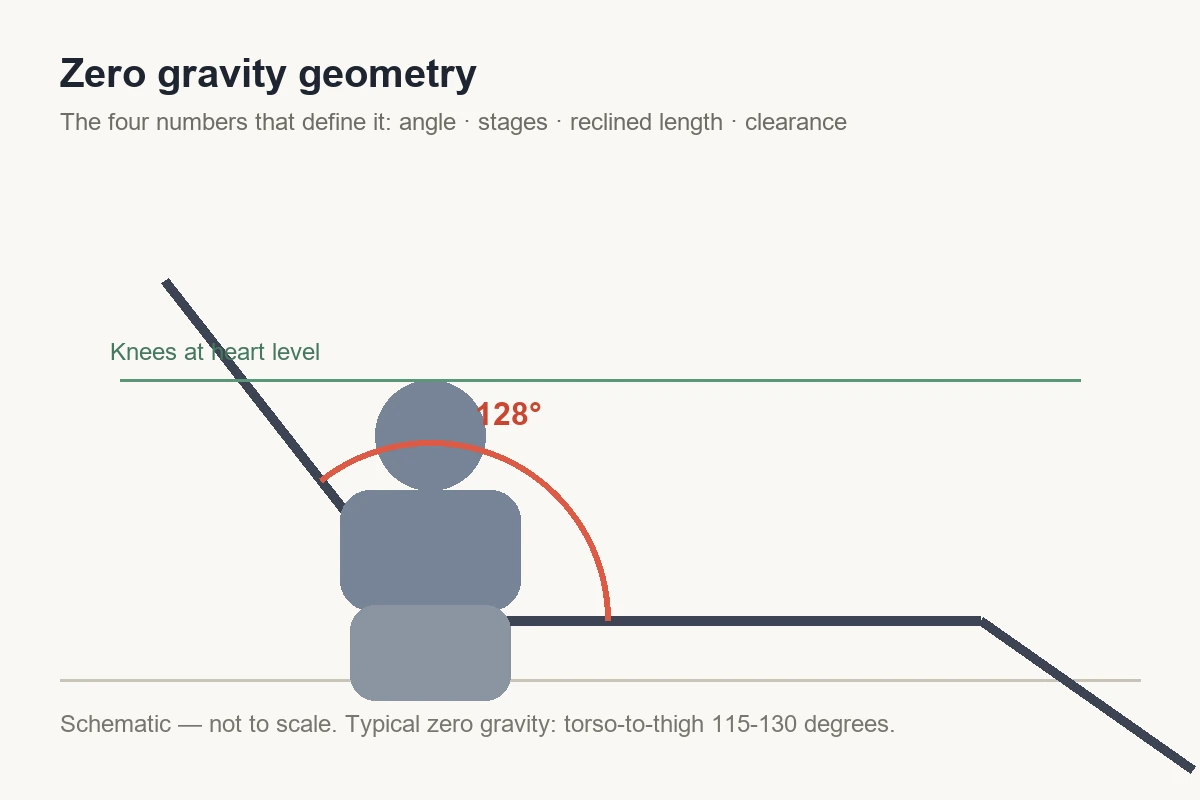
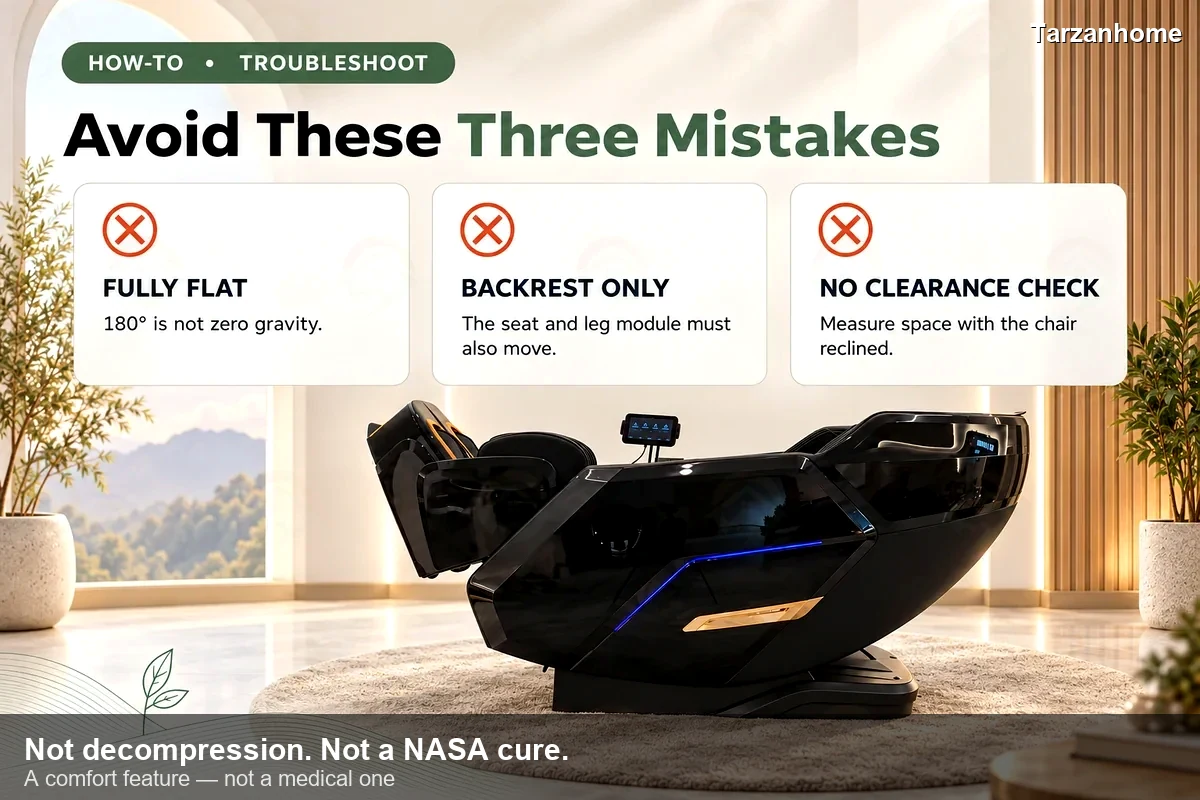
The figure most often quoted is about 128 degrees between your torso and your thighs, give or take 7 degrees, with some studies adding a thigh-to-calf angle near 133 degrees. So “NASA-inspired” is a posture claim, not a physics claim. No chair on Earth makes you weightless — a zero gravity chair simply reclines you into a position similar to the one your body chooses when gravity isn’t loading your joints.
What angle is real zero gravity?
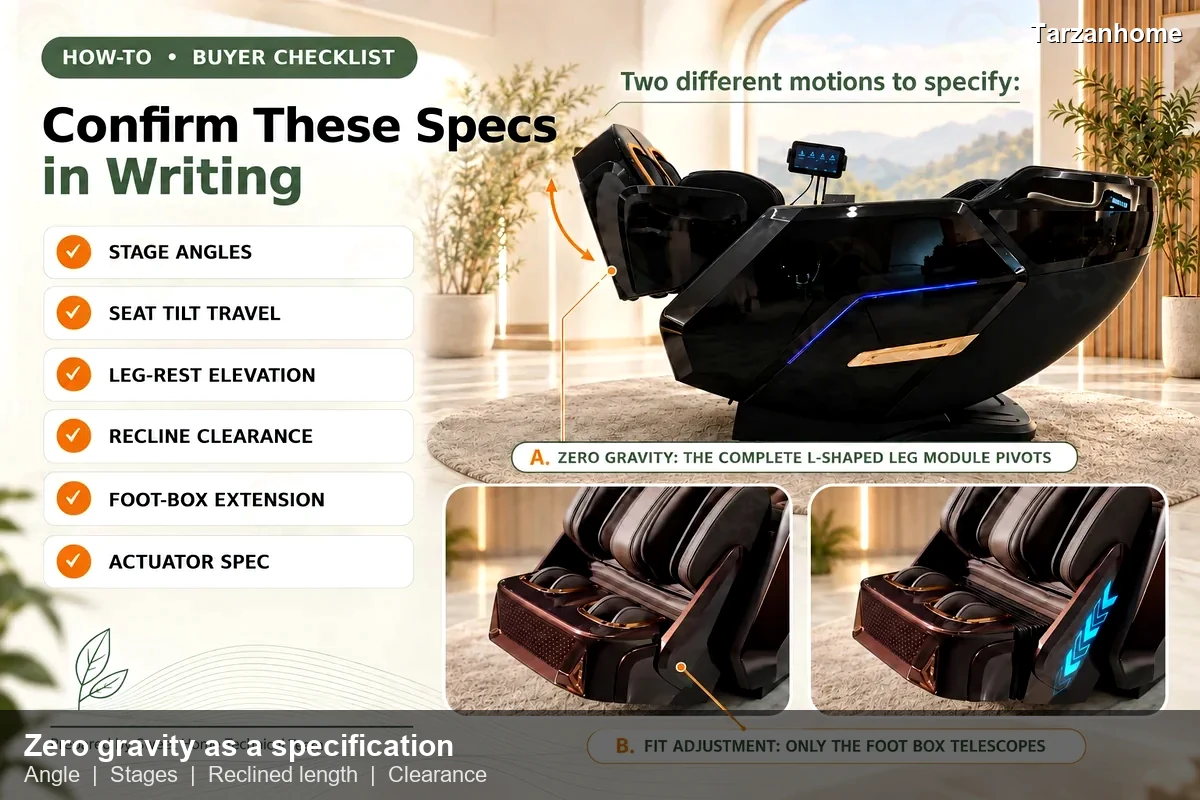
Most full-body chairs implement it somewhere between roughly 115 and 130 degrees of torso-to-thigh angle, often in two or three stages. Published figures vary by model, so confirm three numbers against the spec sheet before you buy: the achieved angle at full recline, the stage count, and the reclined length.
The right angle for you is the one that feels supported. Fit beats a fixed number.
Is the deepest stage the best one?
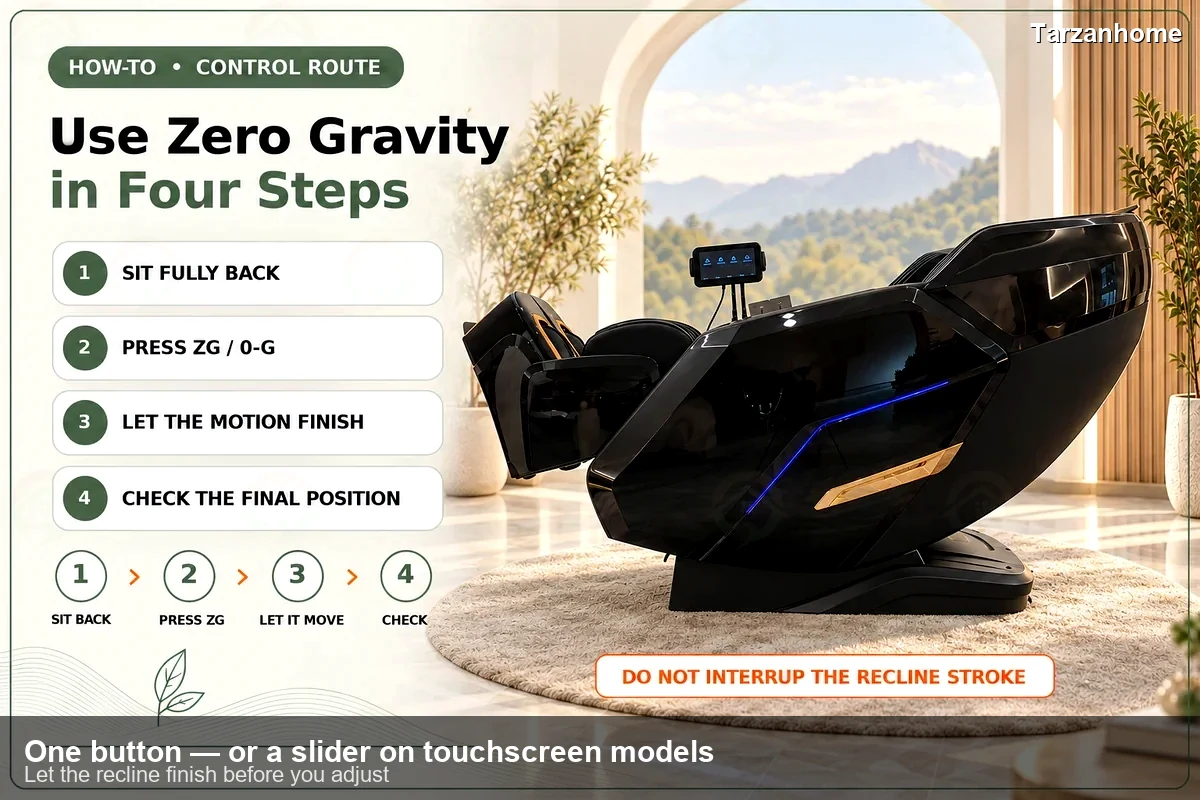
No. The position does its job from the moment your knees reach heart level — most users stop at the shallowest stage that achieves that. Deeper stages need noticeably more room behind the chair and are not more comfortable for every body type. Multi-stage recline is worth having so you can stop short of full tilt, not so you always take it to the max.
Does zero gravity decompress your spine or fix back pain?
No — and this is the claim to be most careful with.
It is not spinal decompression. Real decompression tables are medical devices that cost six figures and stretch the spine under precisely controlled tension — and even those have thin scientific support. The literature on non-surgical decompression therapy has been criticized for years, mostly for small studies without control groups. A chair that reclines you 128 degrees is not doing that.
It is not the “NASA back-pain cure.” That story traces back to an 86% success-rate claim for a traction device, from a study with no control group that never passed peer review. Fact-checkers at Live Science spent years chasing it down; NASA never made any such claim.
And space is not kind to spines. Astronauts grow up to 3.1 inches in their first nine days in microgravity as discs swell — but they also develop back pain on about 52% of astronaut flights, lose spinal curvature and muscle mass, and show a 4.3x higher rate of disc herniation after returning to Earth. Weightlessness is a great laboratory for posture research and a terrible environment for backs.
What zero gravity can honestly do: make a 30-minute session genuinely comfortable, reduce pressure on your lower back and hips, and hold you in a neutral posture so the massage works on a relaxed body. That’s a real benefit. It just isn’t a medical one.
Is zero gravity safe for elderly users and long sessions?
Generally yes — it’s one of the most popular positions for seniors, precisely because it takes pressure off the lower back and legs. The risk isn’t the position, it’s the exit: returning upright and standing takes effort. Look for smooth, slow return-to-upright motion and armrests you can push off from.
On session length, many users run 30–60 minutes in zero gravity without issue. It is not a treatment — anyone with a diagnosed spinal or circulatory condition should follow their clinician’s advice, not a chair specification.
Do all “zero gravity” chairs actually achieve it?
No. A peer-reviewed ergonomics study tested 25 recliners from 10 brands against the Neutral Body Posture benchmarks, with biometric testing on 150 participants. Only 28% of the chairs met the anatomical criteria. The other 72% — including chairs sold with “zero gravity” on the box — were recliners with a marketing sticker.
The label is not the geometry. Before you trust a spec sheet, ask for the numbers.
Quick audit: does the zero gravity chair you’re quoting hold up as a specification?
We’re an OEM factory, so we see this from the other side. When an importer or distributor writes “zero gravity” into an order, the name alone tells us nothing. These five checks separate a real zero gravity chair from a sticker:
| Check | Why it matters |
|---|---|
| Achieved torso-thigh angle at full recline | The label means nothing if the mechanism stops at 110°. Ask for the measured angle, not the brochure value. |
| Recline motor torque at rated load | A chair rated for 270 lbs needs to lift that person plus its own 100+ lb frame, smoothly, thousands of times. Undersized motors are the #1 failure point on cheap “zero gravity” chairs. |
| Frame rigidity under full recline | Tilted back, all your weight lands on two small pivot points. A frame that flexes or creaks here will fatigue and fail. |
| Reclined length and wall clearance | Zero gravity chairs are longer reclined than upright. A chair advertised for a small apartment often needs 30+ extra inches of floor space to fully recline. |
| Entry and exit effort | Seniors are the biggest zero gravity buyers, and the ones who struggle to get out. Test how much effort it takes to return upright and stand. |
If you’re comparing suppliers, ask for the measured numbers, not the renderings. A factory that can send you actual angles, torque ratings, and reclined dimensions is a factory that’s testing. A factory that can only send renderings is a factory that’s guessing.
Bottom line
Buy zero gravity for what it actually does: a deeper, more comfortable massage on a properly supported body. Skip it as medicine. And when a brand won’t tell you the angle — that’s the 72% chair until proven otherwise.
Get the recline numbers before your next order. Whether you’re buying one chair or quoting a container, send us your spec — we’ll reply with the measured geometry of the model you’re looking at. See the C28 Zero Gravity Massage Chair, or contact our team for the numbers behind it.
Related Reading
- Massage Chair Track Length: Why Longer Isn’t Automatically Better
- 5 Common Massage Chair Pitfalls Revealed by Reddit Users (And How to Avoid Them)
- Massage Chair Wholesale: How to Buy in Bulk Without Buying the Wrong Problem
Deciding Which to Stock?
We carry both massage sofas and massage chairs — get wholesale pricing and expert advice on which moves faster in your market.